Pointe Shoe Fitting is a Skill - Not Just a Job
Pointe shoe fitting is one of the most underestimated responsibilities in ballet — and one of the most important.
Hot take: if you’re not classically trained or trained in pointe work, you should not be a pointe shoe fitter.
Pointe shoe fitting is not about retail or making sales. It is a specialised skill that carries real responsibility, because pointe work directly impacts a dancer’s health, safety, and longevity.
This is why I care so deeply about this topic. I’ve seen dancers placed in the wrong shoes and give up on their dreams because of it. I’ve seen dancers get injured or develop technical habits that later lead to injury due to poorly fitting pointe shoes. I’ve also experienced a long-term injury caused by pointe shoes myself — one that still affects me today.
My greatest concern, and my greatest passion, is safe pointe practice. I believe dancers, teachers, and parents deserve access to the knowledge that empowers them to make informed decisions and supports a safe, confident pointe journey.
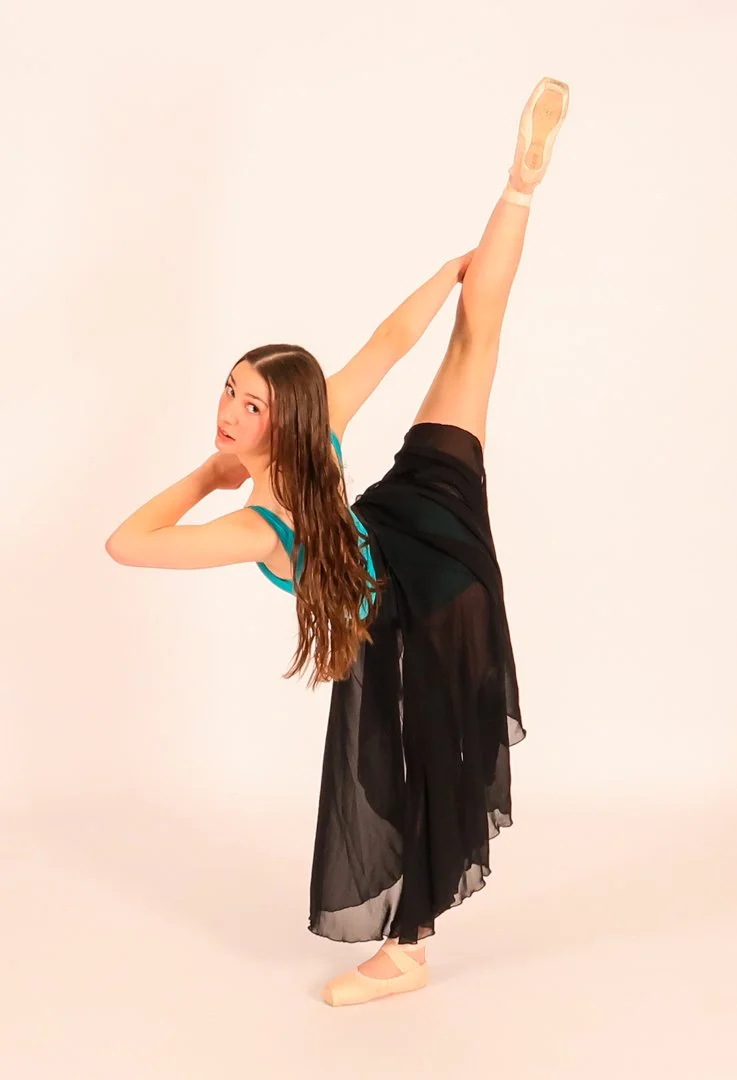
Amelia, NDC STEP Up 2025
Why Fitters Need Ballet Training
I strongly believe that pointe shoe fitters should have a solid background in both classical ballet training and pointe work. This background allows them to truly understand the physical and technical demands placed on dancers, and how pointe shoes can either support or hinder progress in the studio.
When I say training, I don’t mean brief exposure. I mean an in-depth understanding of classical technique built over years of consistent practice — spending multiple hours each week in ballet classes, refining alignment, strength, and control. I mean years spent dancing in pointe shoes, trialling different styles, learning what works and what doesn’t, and experiencing firsthand how a shoe should feel, function, and move with the foot.
Through this kind of lived experience, fitters learn how pointe shoes are meant to work — not just how they look. They understand what is normal discomfort versus potential problem, how the shoe should support the foot en pointe, and how improper fit can interfere with technique or lead to injury.
In addition to training, pointe shoe fitters should have a basic understanding of foot anatomy and biomechanics. This knowledge allows them to recognise how individual physical differences or existing issues may affect a dancer’s pointe work, and to make informed decisions about which shoe may offer better support. It also helps them assess how the foot is sitting in the shoe en pointe — something that is critical for safety.
Ultimately, pointe shoe fitting is about how the shoe moves with the foot, not how it looks standing still. The right shoe can support a dancer’s progress and confidence, while the wrong one can derail both. That’s why this process must be approached with care, knowledge, and respect for the dancer’s body.
The Current Training Gap
At present, the only widely available pathway for formal pointe shoe fitting training is through employment with a pointe shoe brand or a dancewear store that stocks their shoes. As a result, fitters are often trained only in the specific brands they sell, which can significantly limit their understanding of how different shoes may function across a wide range of feet.
Brand-led training is typically short — often around a month — and rarely includes follow-up education or ongoing professional development. In many cases, when new styles arrive in store, fitters will try the shoes on briefly at the barre before placing them back into the storeroom. While this may provide a basic visual reference, it does very little to demonstrate how a shoe actually behaves in practice.
Fitters are not required to mould or break in the shoes, nor do they experience them in full classes or over extended periods of time. They don’t feel how the shoe changes after weeks of wear and classwork. Without this experience, it’s incredibly difficult to predict how a shoe will move with a dancer’s foot.
What Can Go Wrong
One experience I’ve had as a teacher — and unfortunately one I see repeated — is sending dancers for a re-fit when their current pointe shoes are clearly holding them back. Common signs are being pulled off the block or feeling pressure and cutting around the big toe joint, both of which increase the risk of pain, injury and bunion development.
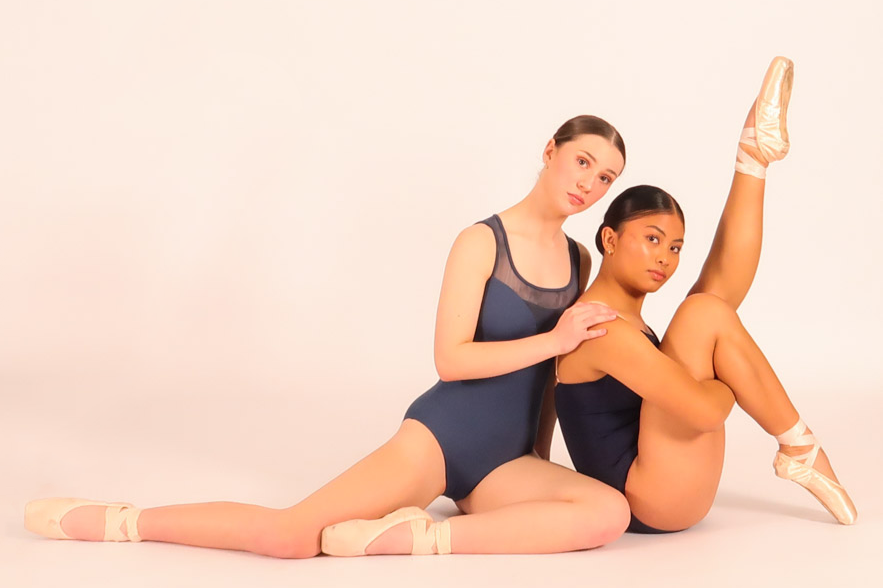
Amelia & Carrelle, NDC STEP Up 2025
When I see these patterns consistently in class, it’s usually clear what needs adjusting. Identifying these concerns can be made easier with one-on-one coaching, where there’s time and space to observe how the dancer moves in the shoes more closely. This is also where we can identify early warning signs before they become injuries.
Often, dancers need longer wings to protect the big toe joint, along with a change in shank strength or lower vamp to help them get fully over the box. While I don’t stock pointe shoes myself, identifying these needs is part of my role as a teacher — and finding the right option should then be the role of the fitter.
Too often, dancers then return in the exact same shoes that were causing the issues in the first place.
In these situations, I’m told the concerns were communicated during the fitting. The dancer is then asked to stand at the barre in a brand-new pair of shoes, in the same style, straight off the shelf, and the assessment ends there. Without moulding, breaking in, or hands-on investigation, many of the problems around wing cutting simply won’t show up.
The dancer leaves feeling unsure and intimidated, parents don’t feel confident questioning the decision, and the shoes are purchased anyway. The following week in class, I see the result — frustration, loss of confidence, difficulty staying on the block, and compensatory habits that increase injury risk.
And this is where the frustration really sits for me as a teacher.
I see my dancers multiple times a week, every week. I watch how their shoes behave, how they move through class, where they struggle, and how their confidence shifts. A fitter, on the other hand, may see that same dancer for thirty minutes once a year — if they’re lucky enough to see the same person at all.
If there are genuinely no suitable shoes available, then that needs to be said honestly. Let the dancer leave without purchasing anything. Selling a shoe that is already known to be problematic doesn’t solve the issue — it puts the dancer at risk.
Confidence, Communication, & Consistency
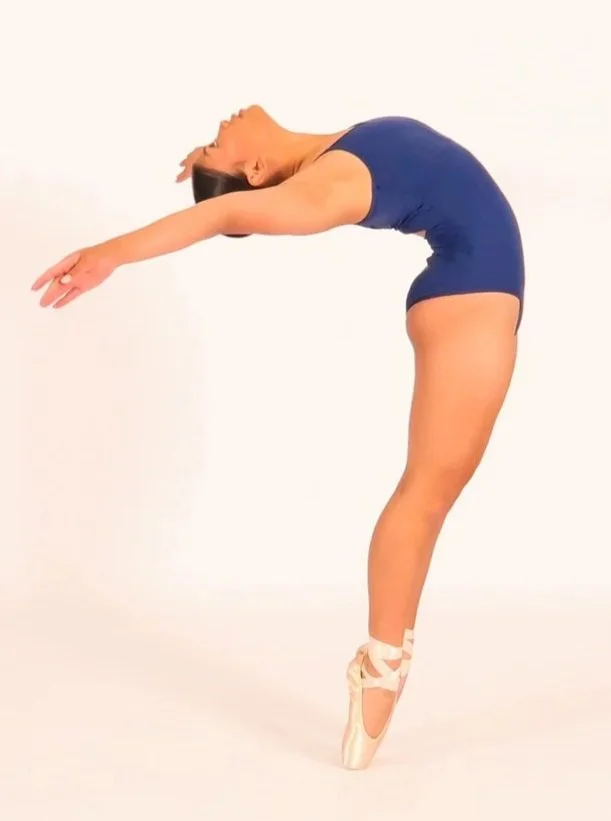
Carrelle, NDC STEP Up 2025
Pointe work can be a strange and unfamiliar experience, especially at the beginning. Walking into a pointe shoe fitting for the first time, many dancers feel unsure, overwhelmed, and uncertain about what they are supposed to feel. Because of this, they often defer to the fitter — agreeing with recommendations not because they feel confident, but because they don’t yet have the language or experience to communicate what’s happening in their body.
Even dancers who do have knowledge to support their pointe work can struggle to speak up. The fitter is positioned as the expert, and when concerns are dismissed or ignored, it reinforces the belief that the dancer’s experience is wrong or unimportant. One poor fitting experience can be enough to teach a dancer to stay silent in every fitting that follows.
Over time, this creates deep uncertainty. Dancers begin to question their own sensations, their understanding, and their ability to know their own bodies. Instead of communicating, they comply — agreeing with whatever the “expert” says, even when something doesn’t feel right.
Another major issue with the current fitting process is the lack of continuity. Most dancers do not have a consistent fitter who is invested in their journey and understands their history. Many fitters are under pressure to prioritise sales, not long-term outcomes or the health and safety of the dancer.
After years of struggling with pointe shoes myself, I eventually found a fitter who truly listened. I felt like her client, not just a customer. She knew what I had tried before, what had worked, and what hadn’t. If another staff member attempted to step in, she would gently take over, because she understood my needs and my history.
What I see happening with many of my students is the opposite. They encounter a new fitter each time, are forced to start from scratch, or feel so limited in their options that they return to the same fitter who doesn’t listen. Both scenarios undermine confidence and stall progress.
Having a consistent fitter — or at the very least, a detailed fitting record — would allow dancers to progress rather than repeat the same cycle. It would save time, support informed decision-making, and help build confidence in both technique and self-awareness. Most importantly, it would open clearer lines of communication between dancers, teachers, and fitters, so everyone is working toward the same goal: safe, supported pointe work.
Pointe Fitting As Professional Care
Pointe shoe fitting should be treated as a form of professional care, not retail assistance. The focus should be on supporting a dancer’s long-term journey — prioritising health, safety, and sustainable progress — rather than simply completing a sale.
One simple but powerful step toward this would be the use of a consistent fitting record. Whether maintained by the fitter, the dancer, or collaboratively. A record could include previous shoes worn, issues experienced, modifications required, and feedback from teachers. This kind of continuity would allow each fitting to build on the last, rather than starting from scratch every time.
Approaching pointe shoe fitting in this way respects the dancer as a developing artist and athlete, and recognises that pointe work carries real responsibility.
A Call For Action!
So here’s where I want to start working toward a solution.
This is my promise to my students for 2026, and I urge other pointe teachers to consider doing the same: if we have the knowledge to support our dancers and create safer, more positive pointe journeys, then we should be using it.
The next time you have a student who is struggling in their pointe shoes, record a short video of them wearing the shoes in class. As you film, record yourself clearly explaining your concerns — what you are seeing, what the dancer is experiencing, and what you believe is contributing to the issue. Have your student take this video with them to their pointe shoe fitting.
This creates direct, consistent communication between teacher and fitter, and helps ensure that concerns are not lost, minimised, or misunderstood. Be clear. Be specific. And trust your pointe knowledge.
Why Knowledge Matters
Pointe work is inherently risky, and risk requires safeguards. Our knowledge is that safeguard.
When we put dancers en pointe, we are asking their bodies to operate in a demanding and unnatural position. A dancer’s body is their instrument — and they only get one. That’s why I am committed to empowering students, teachers, and parents with the knowledge needed to support safe, sustainable, and successful pointe journeys.
Caring for the body means taking pointe seriously. It means asking the right questions, recognising potential problems and understanding how to pursue pointe work safely. Knowledge is not optional in this process — it is foundational.
If we want dancers to thrive long-term, safety must come first. And safety begins with knowing how.
Why Listen To Me?
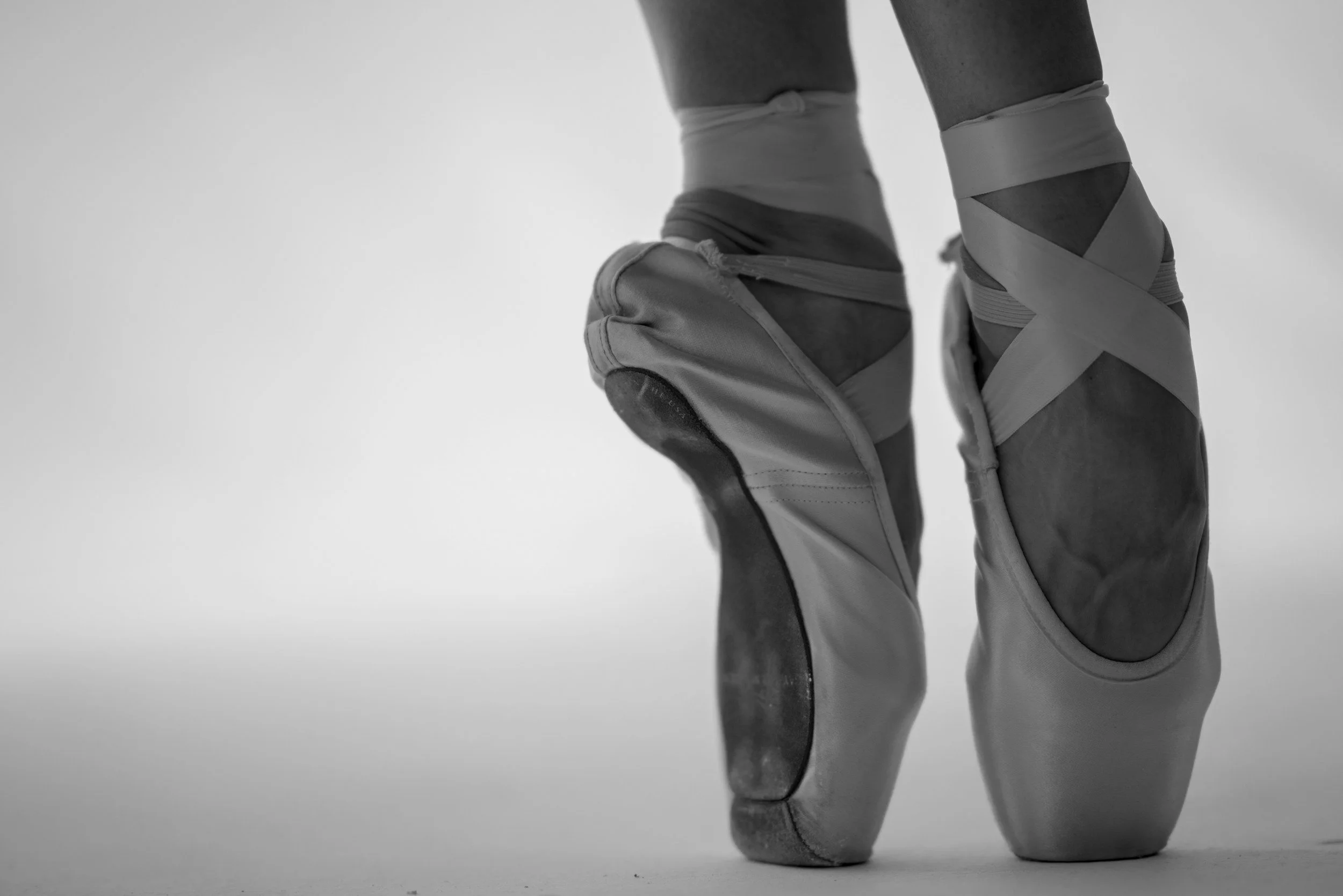
So why do I care so much — and why should you listen?
I’ve been taking ballet since I was two years old. I began taking it more seriously at nine, started full-time training at twelve, and went en pointe at eleven. I’ve now been dancing on pointe for thirteen years.
Because I started pointe at such a young age, I’ve experienced many challenges with shoe fitting. I’ve had limited options, spent years trying to make unsuitable shoes work, and learned firsthand how much the right — or wrong — shoe can either hold a dancer back or allow them to progress freely. Finding your shoe can be transformative, and struggling in the wrong one can be deeply limiting.
While I’ve learned a great deal through my own experience and independent research, the last three years of teaching have taught me the most. Working closely with my students has been a gold mine for understanding pointe mechanics across different bodies — what works, for whom, and why. My students regularly communicate their experiences and concerns to me because I listen openly, and we problem-solve together.
And finally, I am unapologetically a pointe shoe nerd. I love learning everything I can about the pointe world and bringing that knowledge into the studio. I’m deeply committed to continued professional development and to safe dance practice — both physically and mentally. I care about giving my students the tools they need to pursue not just strong technique, but confident, sustainable, and positive careers in dance. There is nothing more rewarding than seeing how far dancers can progress once their physical training is supported by knowledge.
Join The Conversation & Learn More!
If you’re looking to boost your pointe knowledge, stick around — I’ll be sharing more about all things pointe soon. I’d love to hear from you, too! Teachers and students, what has your pointe journey been like? Have you tried using video to communicate with fitters? How did it go? Do you have any fitter horror stories?
For those in Canberra, we have an upcoming Pathway to Pointe workshop! This introductory workshop is suitable for dancers of all levels, teachers, and parents. We’ll cover pointe shoe anatomy, the pointe assessment and fitting process, basic injury prevention specific to pointe, and much more.