
The Consequences of Teaching With Ego
During a class, I was asked to perform grand jeté after grand jeté. After several minutes, I could feel my asthma tightening in my chest. I knew the feeling well — it wasn’t panic, it was just physiology. I asked if I could quickly grab my inhaler.
The response wasn’t instructional. It wasn’t curious or concerned. It wasn’t a check-in. It was irritated:
“Urgh, people like you are hard to work with.”
At that moment, the lesson stopped being about building technique or stamina. It stopped being about achieving higher or more controlled jetés. It became about being an inconvenience. About being a problem.
I didn’t feel motivated to keep trying. I felt ashamed for needing support to breathe.
What followed wasn’t improved endurance — it was concealment. I never asked to grab my inhaler again. I never forgot to bring it into the studio. When I needed it, I stepped around the corner and used it out of sight.

Melia, NDCoaching 2024
Teaching with ego doesn’t always look dramatic. Sometimes it looks like defensiveness. Dismissal. A comment that shifts feedback from task to identity. And when that shift happens, the consequences for students are psychological, not just technical. They feel it immediately — and often carry it far beyond the studio.
In previous articles, we have explored what autonomy-supportive environments can look like and the benefits of creating psychologically safe spaces for dancers. Today, we shift the lens to examine one of the many opposites: ego-involving climates.
Research in sport and educational psychology shows that ego-involving climates are associated with increased anxiety and reduced enjoyment, engagement, and motivation (Smith et al., 2007). These environments often prioritise comparison, evaluation, and outcome over effort, progress, and skill development.
While outcome-driven settings may focus heavily on final grades, perfection, or completion (Butler, 1988), ego-involving climates go a step further. The emphasis shifts from performance to identity. Feedback becomes personal rather than instructional.
In my example, I wasn’t given information about stamina, breathing strategy, or jump mechanics. I was labeled. The feedback did not operate at the level of the task or the process — it operated at the level of the self.
And feedback directed at the self is the least effective at reducing the gap between where a student is and where they are trying to go. It undermines autonomy and competence — two psychological needs essential for sustainable motivation and wellbeing (Deci & Ryan, 2000).
It’s not difficult to imagine the long-term impact of this kind of environment. It affects confidence. It shapes self-belief. It alters motivation. It influences how students relate to their bodies, their teachers, and the art form itself.
When authority protects ego instead of development, students feel it — even if nothing direct is said.
What Does Teaching With Ego Look Like?
Let’s expand on what this climate can look like in practice.
Teaching with ego is not about having high standards. It is about how authority is used. When authority is used to protect image, control perception, or defend identity rather than support development, the climate shifts.
It can show up in subtle and overt ways:
Public shaming or humiliation.
For example, delivering individual exam feedback in front of the entire group — not to facilitate shared learning, but to reinforce hierarchy. Public evaluation amplifies comparison and signals that mistakes are something to be exposed rather than explored.
Conditional approval.
This might sound like promises of front-line positions if competition results improve. It can also be less explicit — noticing that certain body types, personalities, or “low-risk” students are repeatedly chosen. Approval becomes contingent. Belonging becomes earned, often through ways that are out of the students control.
Withholding or inconsistently applying expectations.
Sometimes unintentionally, teachers may fail to clearly articulate standards, or they may apply them differently across students and classes. When expectations are unpredictable, students stop focusing on mastery and begin scanning for cues about mood and favour.
Power-based dominance.
Expecting students to “just know.” Discouraging questions. Using authority to create compliance through fear rather than understanding. In these environments, curiosity becomes risky.
When Authority Protects Ego
An ego-involving climate is also created when teachers use authority to manage their own reputation.
For example, selecting only a few students to represent the studio at competitions — even local eisteddfods — not based on readiness alone, but to avoid the possibility of imperfect results. Or dictating where a student may audition because the outcome is perceived to reflect on the studio rather than the dancer.
Sometimes students are prevented from pursuing opportunities where failure is possible. The rationale may sound protective, but the underlying message can be image-based rather than student-based. Again, the teacher is more concerned about how the outcome might make the studio look, rather than the opportunity for growth for the student.
Over time, the message becomes clear: Your ambition must fit my vision. Your development is secondary to my reputation.
When authority is used to regulate image, students internalise this as personal evaluation.
Approval becomes conditional.
Opportunity becomes political.
Performance becomes representation.
Motivation shifts from process and skill development to managing a teacher’s expectations, emotions, and ego. Research consistently shows that when climates become ego-involving rather than task-involving, anxiety increases and intrinsic motivation declines (Smith et al., 2007; Deci & Ryan, 2000). Over time, this pattern can contribute to burnout, disengagement, and a fractured relationship with dance.
From Ego to Growth:

Melia, NDCoaching 2024
In sport and educational psychology, learning environments are often described as either ego-involving or task-involving (Smith et al., 2007).
An ego-involving climate emphasises comparison, ranking, and external evaluation. Success is defined by outperforming others. Mistakes become visible evidence of inadequacy. Approval is tied to results.
A task-involving climate shifts the focus.
Rather than asking, Who is the best? it asks, How is each individual progressing?
Switching from an ego-involving to a task-involving climate involves centering the dancer’s development rather than the studio’s image. It means:
Minimising social comparison
Treating mistakes as necessary tools for learning rather than failures to be punished
Providing feedback at the level of the task and the process
Recognising effort, strategy, and improvement
Aligning goals with the individual dancer’s stage of development
In a task-involving climate, feedback is directed toward skill acquisition and growth. The emphasis is on effort, persistence, and refinement — not identity.
Research consistently shows that task-involving environments are associated with higher enjoyment, greater intrinsic motivation, and lower anxiety (Smith et al., 2007). When dancers perceive that improvement — rather than comparison — is valued, they are more willing to take risks, ask questions, and persist through challenges.
This shift also aligns with Self-Determination Theory (Deci & Ryan, 2000), which emphasises that autonomy, competence, and relatedness are essential psychological needs. Task-involving climates support these needs by:
Allowing dancers to experience competence through measurable progress
Supporting autonomy through clear expectations and meaningful feedback
Maintaining relatedness through consistent and respectful communication
When these needs are supported, motivation becomes more sustainable. Engagement deepens. Anxiety decreases. Performance becomes a byproduct of development rather than a defence against evaluation.
The Consequences for Our Students
Teaching with ego does not simply change the atmosphere of a class — it changes how students think about themselves, how they learn, and how their motivation shifts.
1. A Decline in Intrinsic Motivation
One of the most consistent findings in motivation research is that controlling or ego-involving environments reduce intrinsic motivation (Deci & Ryan, 2000; Reeve, 2012). When approval becomes conditional and evaluation becomes personal, students shift from dancing because they love it to dancing for validation.
Over time, this can create a quiet erosion of identity.
Students may struggle to remember why they started dancing in the first place. Their personal goals become blurred by the effort to fit a teacher’s expectations. Instead of asking, What do I want to improve? they begin asking, What will make my teacher approve of me?
The locus of motivation moves outward.
2. Increased Anxiety and Fear-Based Training
Ego-involving climates are strongly associated with increased anxiety and fear-avoidant behaviours (Smith et al., 2007). Performance anxiety, in particular, is more common when students perceive that mistakes will be judged as reflections of their ability or worth.
When feedback operates at the identity level, the stakes feel higher. A correction is no longer about refining technique — it becomes a label on competence and identity.
As a result, students may:
Avoid challenging combinations
Over-monitor their mistakes
Become hyper-aware of comparison
Suppress questions or vulnerability
Learning narrows because the nervous system shifts toward threat detection rather than exploration.
3. Fragile Confidence and Externalised Self-Worth
Confidence built on external approval is unstable.
When teaching emphasises identity-level feedback — praise such as “You’re a natural” or criticism such as “You’re difficult” — students struggle to build a stable sense of competence. Their confidence fluctuates with not just their own mood but their teacher’s, as well as selection, casting, or attention (Deci & Ryan, 2000; Hattie & Timperley, 2007).
Process-focused feedback builds skill, confidence, and sense of self.
Identity-focused feedback builds dependency, uncertainty, and anxiety.
In ego-involving climates, students often tie their worth to visibility, ranking, or correction patterns. This makes confidence fragile and easily disrupted.
4. Burnout, Avoidance Goals, and Disengagement
Over time, constantly monitoring approval and guessing expectations becomes exhausting.
Research links ego-involving environments to burnout and disengagement (Smith et al., 2007). Students may begin to adopt avoidance goals, such as: “I’m going to work hard today so I don’t get criticised.”
Avoidance goals focus on preventing negative outcomes rather than achieving growth (Lochbaum & Gottardy, 2015; Kinoshita et al., 2020). They are often driven by external pressure, perfectionism, or fear of judgement. This mindset has been associated with pessimism, reduced wellbeing, and lower-quality engagement in training.
Instead of focusing on progress, skill refinement, or mastery, students focus on emotional management:
Managing their teacher’s reactions
Avoiding mistakes
Securing approval
Fitting the mold
Eventually, the psychological load can outweigh the joy of participation. Some dancers disengage emotionally. Others leave dance entirely.
The Long-Term Impact
The most significant consequence of teaching with ego is not immediate performance decline. It is the gradual reshaping of how students relate to learning, risk, and themselves.
When development is replaced with evaluation, students do not become more resilient — they become more cautious.
And caution is not the same as growth.
Why It Happens: The Psychology of Threat and Fear
Melia, NDCoaching 2024
Ego-involving climates often feel hostile — not always overtly, but subtly. Unpredictable approval, public criticism, or identity-based feedback create an environment where students begin scanning for threat.
When the brain perceives threat, even social threat, attention narrows. According to threat-processing research (Fanselow, 2018), the nervous system prioritises survival-relevant information. The goal becomes safety, not skill development.
In a studio context, that can look like:
“I won’t stand in the front so I don’t get called out.”
“I won’t ask questions in case I get shut down.”
“I’ll avoid that audition — I don’t want to fail publicly.”
These are not signs of laziness or lack of ambition. They are maladaptive responses to perceived risk.
When fear becomes the primary driver, avoidance becomes the only strategy.
Instead of concentrating on musicality, spatial awareness, or technical refinement, the mind allocates energy toward monitoring tone, anticipating criticism, and preventing embarrassment. Cognitive resources are limited. When a significant portion of attention is devoted to self-protection, fewer resources remain for flexible thinking, creativity, and motor learning (Fanselow, 2018).
Over time, this state can make thinking more rigid and behaviour more cautious. Risk-taking decreases. Exploration narrows. Students become less likely to experiment, question, or push their capacity.
In other words, the climate shapes the nervous system — and the nervous system shapes behaviour.
An autonomy-supportive, task-involving climate broadens attention and supports exploratory learning. An ego-involving climate narrows attention and promotes defensive behaviour.
Healthy learning can not thrive in defence mode.
What This Looks Like in Real Students
Ego-involving climates do not just exist at a theoretical level. They show up in behaviour — sometimes subtly, sometimes dramatically.
There are patterns that teachers and parents can look out for. Not as proof of wrongdoing, but as signals that something in the environment may not feel psychologically safe.
Withdrawal and Reduced Engagement
A student who once asked questions, experimented, or volunteered to demonstrate may begin to withdraw.
They might:
Ask fewer questions
Avoid eye contact
Stand at the back
Appear compliant but emotionally distant
Withdrawal is often interpreted as a lack of motivation. In many cases, it is a strategy to reduce exposure.
Over-Preparation and Perfectionism
Not all disengagement looks passive. Some students respond to ego-involving climates by over-functioning.
They may:
Rehearse excessively beyond what is required
Become highly distressed over minor mistakes
Struggle to tolerate imperfection
Seek constant reassurance
This pattern is often driven by outcome-focus, unclear or inconsistent expectations, and fragile self-regulation. The goal becomes avoiding criticism rather than developing skill.
Heightened Performance Anxiety
Some increase in nerves before exams or performances is normal. However, when anxiety consistently exceeds what is typical for the situation or continues outside of the situation— panic, sleep disturbance, tears, dread — it may reflect fear of evaluation rather than excitement about performing.
In ego-involving climates, performance feels like high-risk exposure, not an opportunity to perform, be expressive, or truly dance.
Avoidance Behaviours
Avoidance can become more explicit over time:
Not wanting to attend class
Requesting to skip certain teachers
Dropping out of competitions
Avoiding auditions or masterclasses
Expressing a desire to quit dance altogether
Avoidance is often a protective response to repeated psychological threats.
Avoidance of Challenge
Students may also begin to avoid difficult combinations, new skills, or opportunities that stretch them. If mistakes feel unsafe, challenge feels dangerous.
Growth requires risk and fear shuts that down.
Identity Changes
Perhaps the most concerning shifts occur at the identity level.
Students may:
Tie their self-worth entirely to external approval
Engage in constant comparison
Become highly self-critical
Lose a sense of identity outside the studio
When identity becomes dependent on validation, confidence becomes unstable. A single correction can feel like confirmation of inadequacy.
Over time, the dancer may struggle to distinguish who they are from how they are evaluated.
A Gentle Reminder

Melia, NDCoaching 2024
It’s important to note that these outcomes are not caused by one harsh comment or one difficult class. They emerge from patterns — climates that consistently prioritise comparison, image, and identity-level evaluation over growth and development.
When students feel safe, supported, and challenged appropriately, these patterns are far less likely to take root.
Teaching Without Ego: What It Actually Requires
If ego-involving climates distort motivation and create hostile environments, the question becomes: what does teaching without ego look like?
1. Start With the Student’s Goals
The first step is understanding your students’ goals — specifically what they are, how they may differ from your own, and what you can realistically provide to move them closer to their goals.
As teachers, our role is to guide students toward their aspirations and equip them with the tools, skills, and knowledge to get there.
Students are not vehicles for building an image, protecting a reputation, or reinforcing status. If recognition follows good teaching, that is a byproduct — not the purpose.
When a teacher’s primary goal becomes image management, students feel it. When the primary goal is development, they feel that too.
2. Make Expectations Explicit
Clear expectations are a form of psychological safety.
Simply saying “because I said so” or “just do it” creates ambiguity and students will always fill ambiguous gaps — often with self-blame.
Trying to meet expectations that are undefined or inconsistently applied is exhausting. Constantly guessing whether you are meeting the standard, and how to meet it, is anxiety-inducing.
Explain your decisions. Clarify your standards. Apply them consistently.
Clarity reduces threat. Predictability supports competence.
3. Focus on Process — Not Persona
It may sound repetitive, but process-focused feedback is foundational.
Praise effort. Highlight progress. Notice strategy. Celebrate small technical improvements — not just final outcomes.
Yes, major achievements should be celebrated. But confidence is built in the accumulation of small wins.
When students feel competent in the process, performance becomes sustainable rather than fragile.
4. Encourage Curiosity Over Compliance
The classroom should be a space for exploration.
Students do not “just know.” If they did, they would not be students. It is the teacher’s role to bridge the gap between where the dancer is and where they are going — through explanation, demonstration, questioning, and refinement.
Encourage questions. Invite reflection. Model curiosity.
Compliance may produce short-term precision. Curiosity produces long-term growth.
5. Invite Individuality, Not Just Conformity
Dance often requires clean lines, musical precision, and stylistic consistency. These standards can coexist with individuality.
Students are not blank slates to be moulded into a single aesthetic. Teaching dancers how to work with their unique physicality, artistry, and personality is not lowering standards — it is expanding them.
The future of dance increasingly values adaptability and authenticity. Our teaching practices should reflect that.
Providing Effective Feedback: A Practical Framework
There are, quite simply, more and less effective ways to give feedback. Some feedback brings dancers out of their shell. Some sends them back into it.
A widely cited model by John Hattie and Helen Timperley (2007) offers a clear framework for understanding the difference.
According to their model, effective feedback should answer three key questions:
Where am I going? (Feed Up)
How am I going? (Feed Back)
Where to next? (Feed Forward)
The purpose of feedback is to reduce the gap between the student’s current performance and their goal. However, the effectiveness of feedback depends not just on what question it answers, but on the level at which it operates. Hattie and Timperley describe four levels:
Task Level – Specific performance elements
Process Level – Strategies and understanding
Self-Regulation Level – Monitoring, reflection, and awareness
Self Level – Personal praise or criticism
Research consistently shows that feedback at the task, process, and self-regulation levels is far more effective at reducing the learning gap than feedback directed at the self.
Below are examples of feedback statements placed within this framework in Figure 1:
“Today our goal is to maintain turnout throughout the entire plié exercise.”
“Your turnout turns off in fourth position.”
“You’re starting the movement correctly, but losing your turnout through the transition steps.”
“Did you notice what adjustments you made after that correction? Your awareness is developing really well.”
“Next time focus on engaging the deep rotators before lifting the leg.”
“Before starting the exercise, check in on your posture and cue yourself verbally.”
“You’re such a natural.”
“You have so much potential.”
“People like you are hard to work with.”
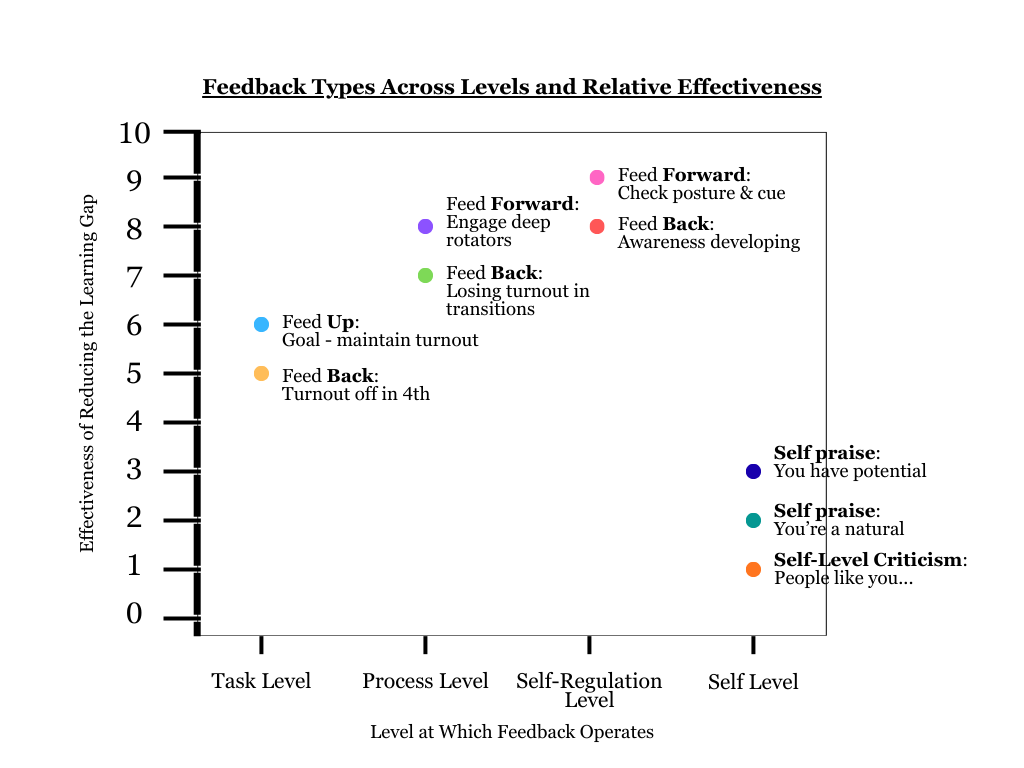
Figure 1 illustrates where each of these examples sits within the model.
Along the X-axis, we see the level at which the feedback operates. Along the Y-axis, we see the relative effectiveness of that feedback in reducing the learning gap. The figure also demonstrates which of the three guiding questions each comment is attempting to answer.
Notice the pattern: feedback that focuses on task, process, and self-regulation moves students forward. Feedback that targets identity — whether positive or negative — contributes little to skill development and can undermine autonomy and confidence.
Teaching without ego does not mean avoiding correction. It means directing correction toward growth rather than identity.
Conclusion: The Climate We Create Matters
Teaching is not neutral. The climate we create shapes our students’ experience.
When authority is used to protect ego, image, or reputation, students feel it — often immediately. What may seem like a passing comment or small decision can alter motivation, increase anxiety, and slowly reshape a dancer’s relationship with learning.
Ego-involving climates narrow attention, increase fear, and shift motivation toward avoidance and approval-seeking. Over time, this can erode confidence, distort identity, and push students away from the very art form they once loved.
In contrast, task-involving, autonomy-supportive environments expand capacity. They make room for mistakes, curiosity, and growth. They separate identity from performance and recognise that development is not linear.
Teaching without ego does not mean lowering standards. It means raising awareness. It means asking:
Is this decision about the student’s growth or my image?
Is this feedback guiding skill or judging identity?
Am I building competence or compliance?
Students do not need perfect teachers. They need reflective ones because long after combinations are forgotten and exams are over, what remains is not just what they learned — but how they felt while learning it.
And that is something we have the power to shape.
-
Butler, R. (1988). Enhancing and undermining intrinsic motivation: The effects of task-involving and ego-involving evaluation on interest and performance. British Journal of Educational Psychology, 58, 1-14. https://doi.org/10.1111/j.2044-8279.1988.tb00874.x
Deci, E. L. & Ryan, R. M. (2000). The “what” and “why” of goal pursuits: Human needs and the self-determination of behaviour. Psychological Inquiry, 11(4), 227-268.
Fanselow, M. S. (2018). Emotion, motivation, and function. Current Opinion in Behaviour Sciences, 19, 105-109. https://doi.org/10.1016/j.cobeha.2017.12.013
Hattie, J. & Timperley, H. (2007). The power of feedback. Review of Educational Research, 77(1). https://doi.org/10.3102/003465430298487
Kinoshita, K., MacIntosh, E., & Sato, S. (2020). The relationship between avoidance goals and goal attainment: A moderated mediation analysis. Research Quarterly for Exercise and Sport, 91(3), 394-404. https://doi.org/10.1080/02701367.2019.1676370
Reeve, J. (2012). A self-determination theory perspective on student engagement. In S. L. Christenson, A. L. Reschly, & C. Wylie (Eds.), Handbook on student engagement. Springer. https://doi.org/10.1007/978-1-4614-2018-7_7
Smith, R. E., Smoll, F. L., & Cumming, S. P. (2007). Effects of a motivational climate intervention for coaches on young athletes' sport performance anxiety. Journal of Sport & Exercise Psychology, 29, 39-59.
Lochbaum, M. & Gottardy, J. (2015). A meta-analysis review of the approach-avoidance achievement goals and performance relationships in the sport psychology literature. Journal of Sport Psychology Literature, 4(2), 164-173. https://doi.org/10.1016/j.jshs.2013.12.004